

Last updated October 15, 2026
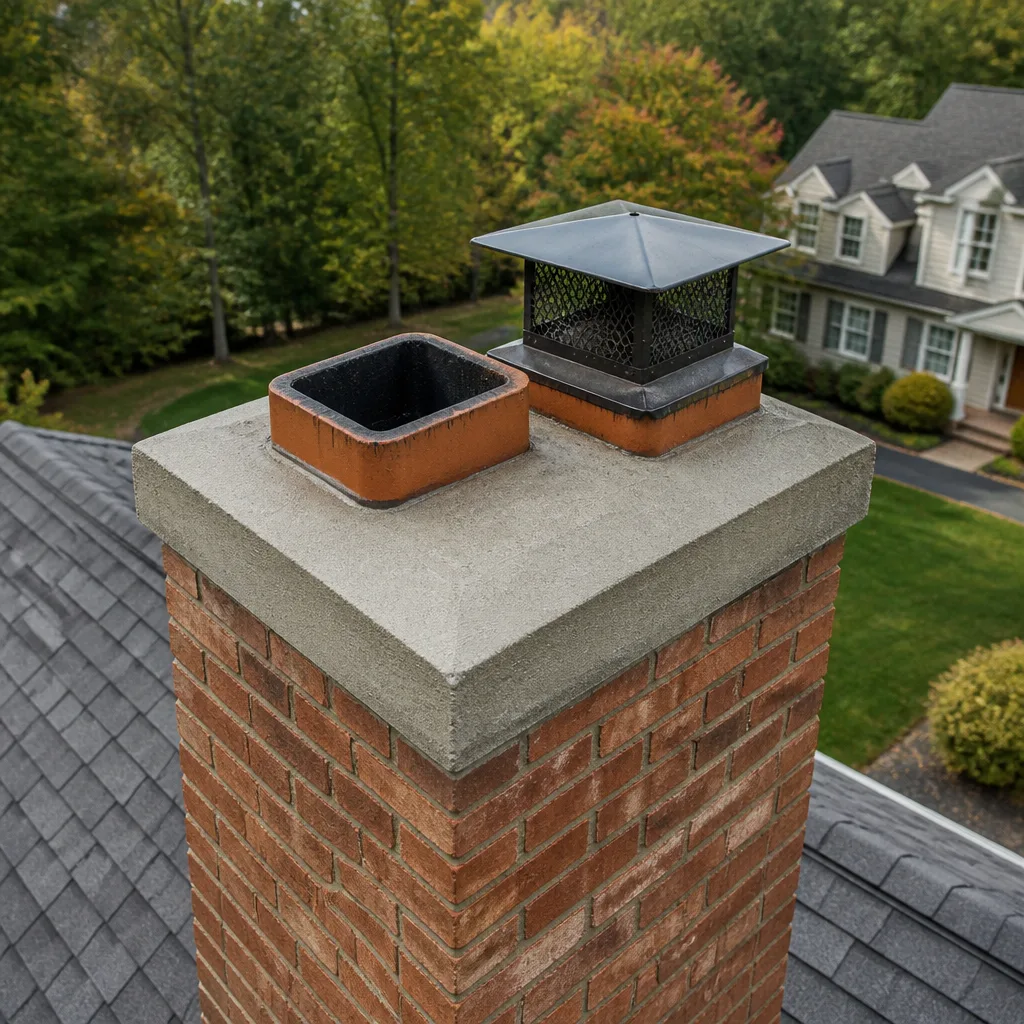 Sweep & inspection
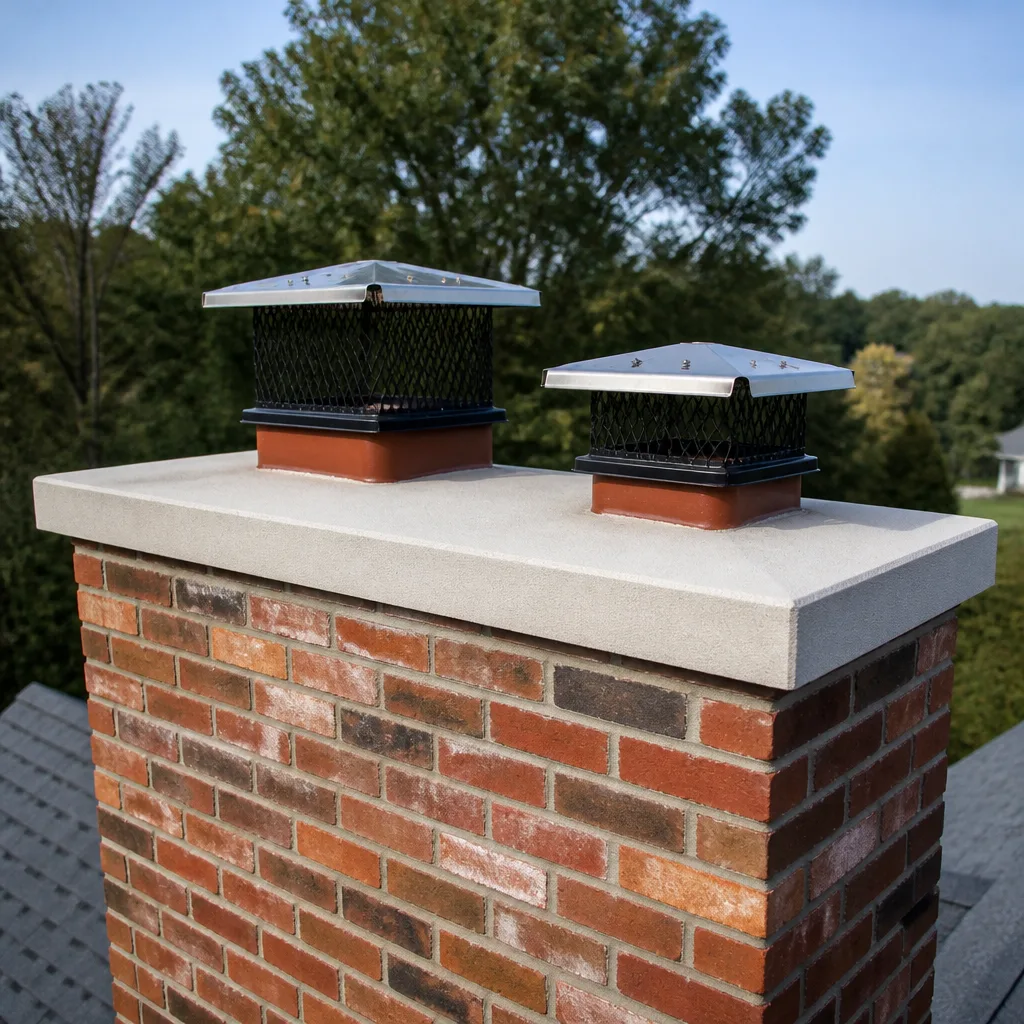 Caps & crowns
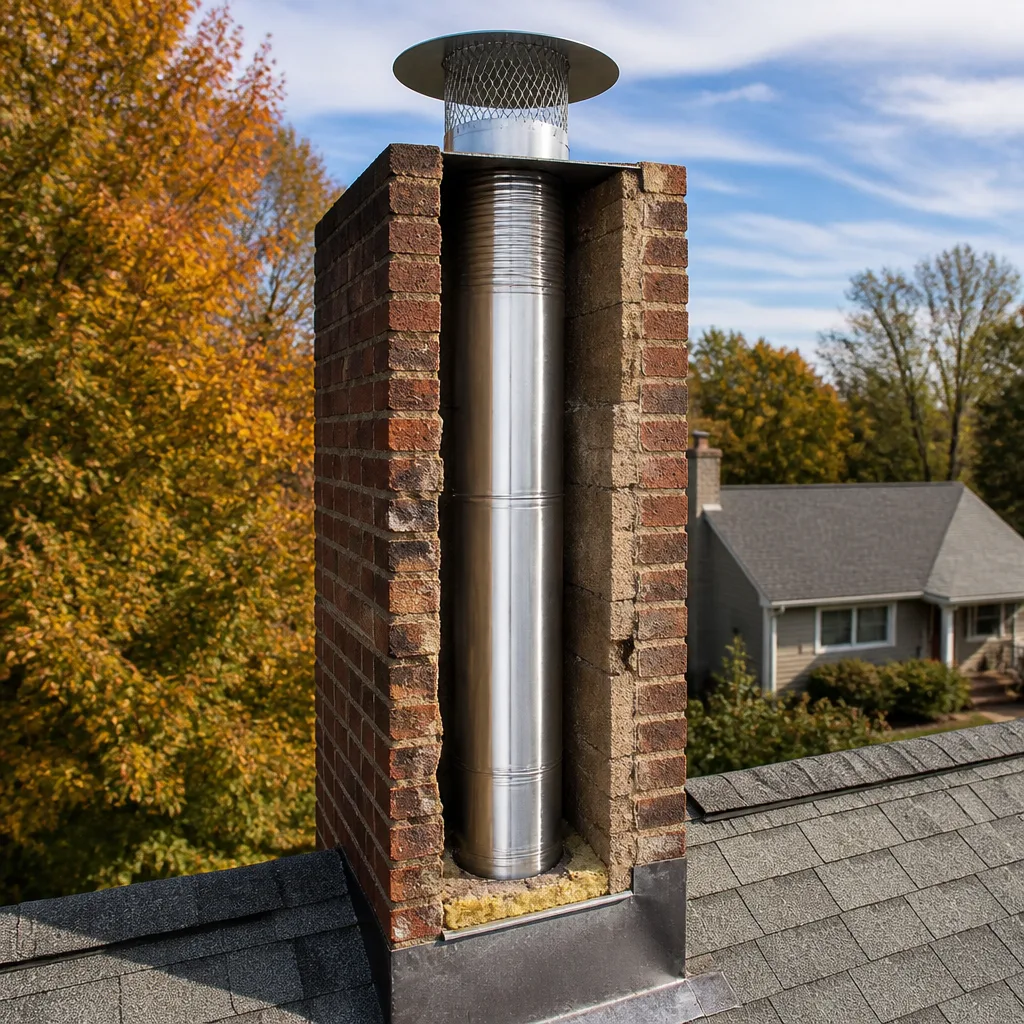 Flue relining
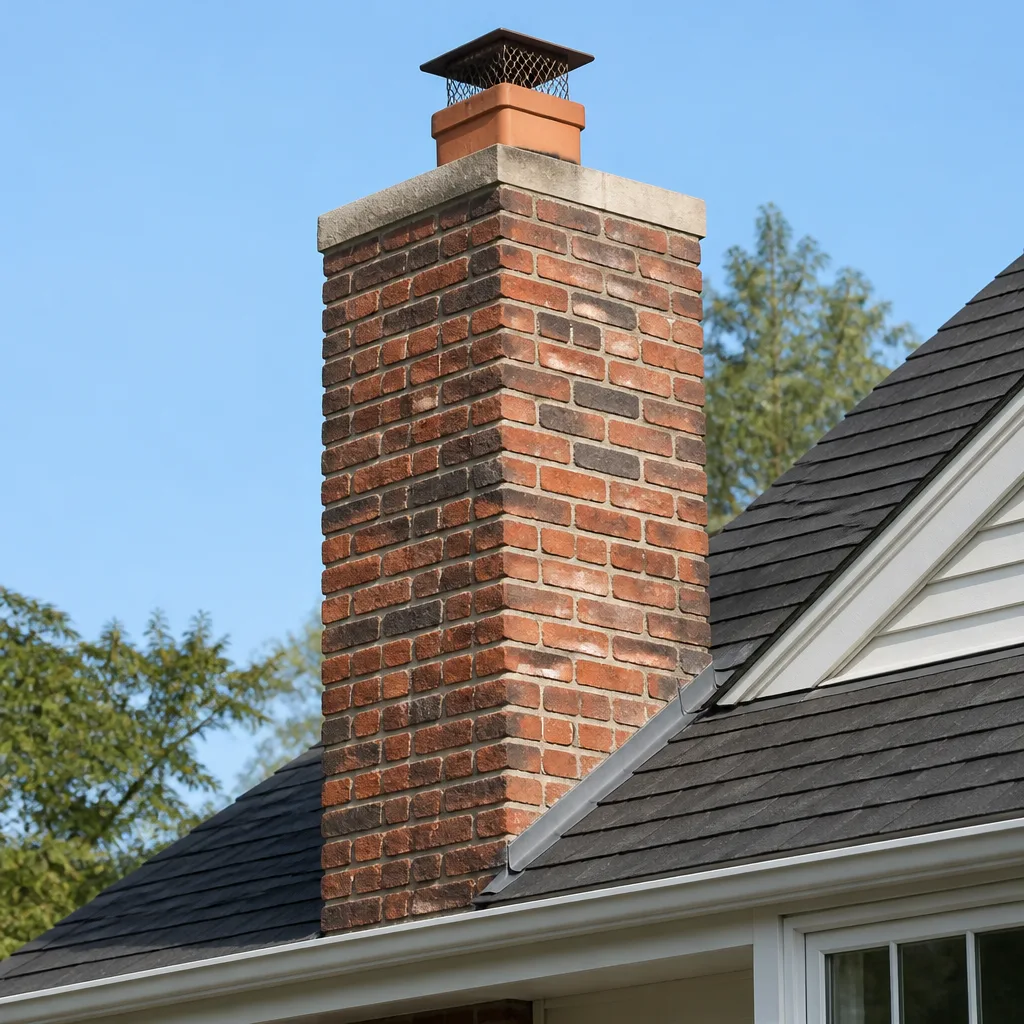 Masonry repair
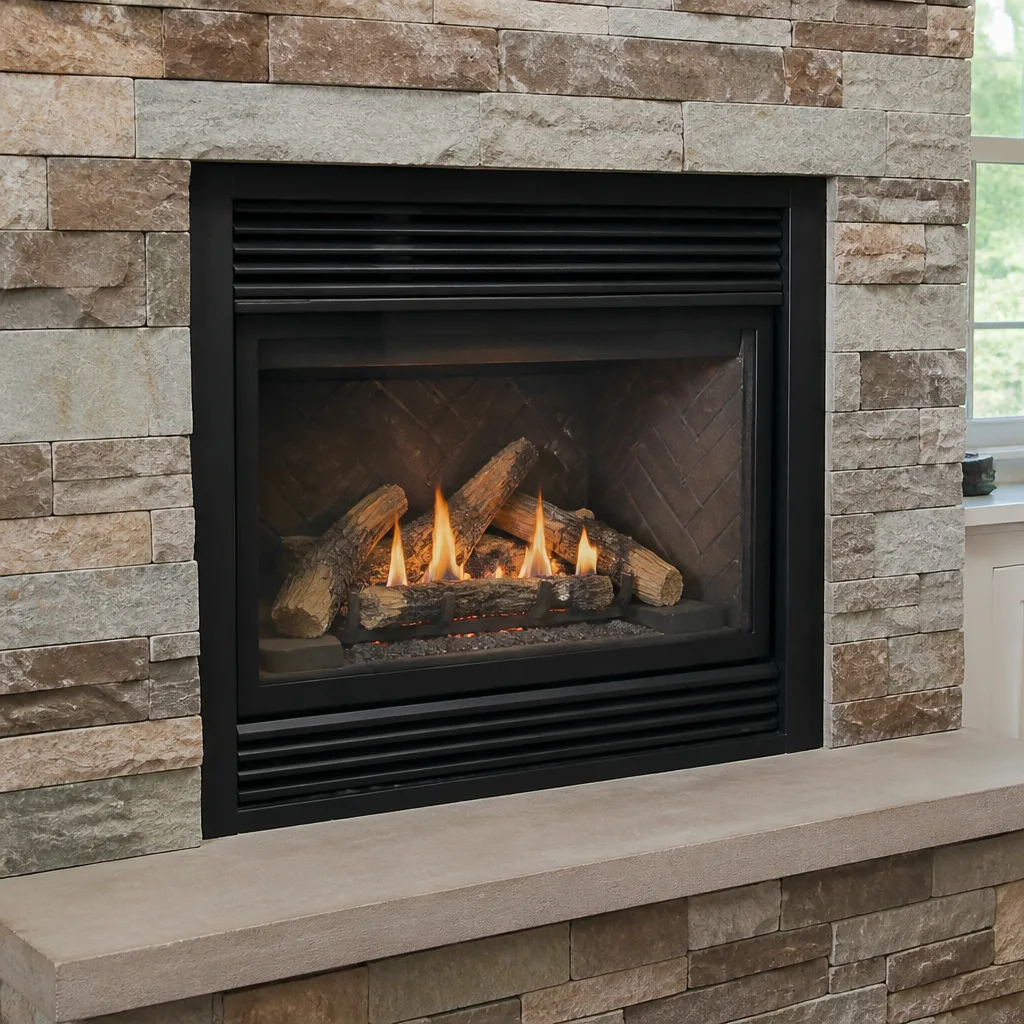 Gas fireplace service
Level 1 sweep and inspection to the NFPA 211 annual standard - flue, crown, cap, and flashing checked and photographed
Chimney sweep logs do not sweep chimneys. They loosen some creosote - which then falls where a brush and vacuum still have to collect it.
Chimney Cleaning Warning Signs: A Henderson Homeowner’s Reference Guide
Here’s a fact most chimney guides won’t lead with: in Henderson, the chimney problems that turn dangerous rarely announce themselves with smoke backing into the living room. They announce themselves with a pale white stain spreading across brick, a rain cap that’s no longer sitting square, or a scratching sound behind the firebox damper at 6 a.m. A Henderson chimney that hasn’t seen a fire in eight months can be holding a collapsed flue tile, an active bird nest, or a hidden creosote load with no odor and no visible smoke at all. This guide is built for the homeowner who wants to know what to look for before lighting that first fire of the season. You’ll learn the visual and structural signals, what they mean, what’s normal, and what needs a professional before another fire is lit.
Styles & brands we work with
Quick Answer
The most common chimney warning signs in Henderson are visible before any fire is lit: white mineral staining (efflorescence) on exterior brick, a rain cap that tilts or shows rust perforation, flaking mortar joints, and black creosote accumulation you can see or feel inside the firebox. Structural sounds like scratching or fluttering, or a hollow draft echo, indicate animal intrusion or a compromised flue liner. Any of these signals without smoke or odor still warrant a professional chimney inspection in Henderson before the first burn of the season.
Table of Contents
- Visual Warning Signs You Can Check From the Ground
- White Staining (Efflorescence): What It Means in Henderson’s Climate
- What to Look For Inside the Firebox Opening
- Odor Signals: Normal Closed-Up Smell vs. Action-Required Smell
- Sound Signals: Scratching, Fluttering, and the Hollow Echo
- What to Do When You Find a Warning Sign: The Stop-Use to Assessment Sequence
- What Documentation to Request From Any Chimney Professional
- Common Mistakes to Avoid
- When to Call a Professional
- Frequently Asked Questions
- The Bottom Line
Visual Warning Signs You Can Check From the Ground
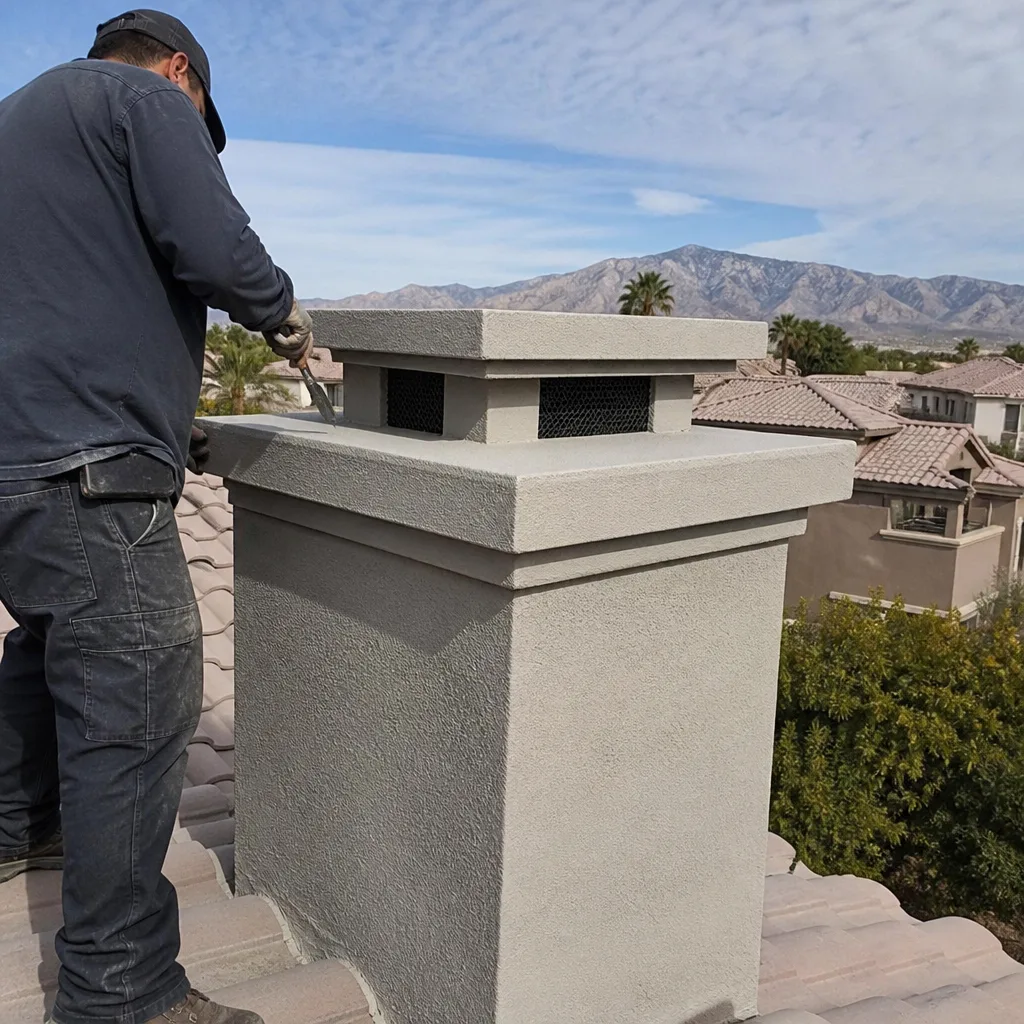
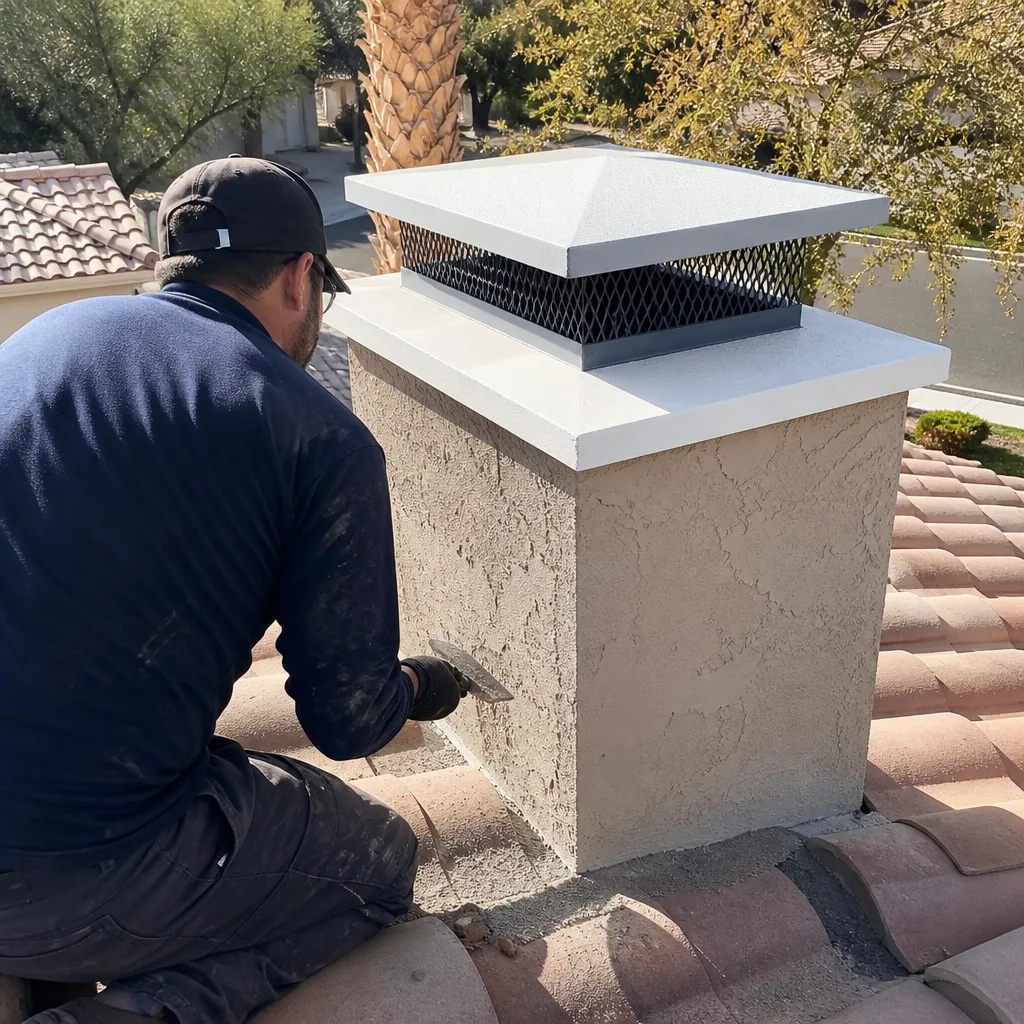
Stand in your front yard or driveway and look up at the chimney. You don’t need a ladder, and you shouldn’t get on the roof. From ground level, with a pair of binoculars if you have them, you can identify the majority of Henderson chimney problems before they become hazards. The first thing to check is the rain cap, sometimes called a spark arrestor. That metal cap at the very top of the flue exists for two reasons: it keeps rain out and it keeps animals out. In Henderson’s sun, rain caps take a beating. The combination of intense UV exposure through the summer and occasional heavy monsoon rain in July and August creates a cycle that weakens the galvanized steel or aluminum over time. Look for a cap that’s tilted, dented, or showing rust perforation. A rain cap with holes in it doesn’t keep rain out, and a tilted cap leaves a gap wide enough for a pigeon or a squirrel.
Next, look at the mortar joints between the bricks. Henderson’s daytime heat causes brick and mortar to expand; the sharp nighttime temperature drops cause contraction. Over years, that cycle works mortar loose. You’re looking for mortar joints that look recessed, crumbly, or missing entirely in spots. Run your eyes up and down the vertical lines of the chimney. If the mortar is pulling away from the brick, you’ll see dark gaps where water can enter. Missing mortar is called a spalling risk, and here’s why it matters in Henderson specifically: every winter, even a short freeze after a rain can freeze water trapped in those gaps. Freezing water expands, and bricks crack or pop off. In a desert climate, people assume freeze damage isn’t a concern. Henderson’s winter nights regularly dip near freezing, and any water that got into the chimney during a monsoon storm is exactly where it shouldn’t be come January. We’ve seen chimneys in Green Valley and Anthem with spalled brick faces caused by exactly this sequence: monsoon rain, entry through missing mortar, then a cold snap.
Finally, check for any visible cracking that runs vertically or diagonally across the chimney structure itself. A vertical crack that follows the mortar line is one thing; a diagonal crack that runs through bricks is something else entirely. A diagonal or stair-step crack can signal foundation movement or structural settlement. If you see that, do not use the fireplace until a professional has assessed it. Link that visual cue to the broader service we offer here: Chimney Inspection in Henderson assesses the full structure from cap to firebox, including cracks you can’t see from the ground.
White Staining (Efflorescence): What It Means in Henderson’s Climate
That white, chalky film spreading across the face of a chimney is called efflorescence. The word is a trade term that just means mineral salt deposits left behind when water evaporates. Here’s how it happens: water enters the brick or mortar somewhere, dissolves the natural salts inside the masonry, then works its way back out to the surface. When the water evaporates in the dry Henderson air, the salt stays behind as a white stain. It’s essentially the chimney sweating minerals. In Henderson’s heat-and-occasional-rain cycle, efflorescence is more common than in many wetter climates, because water enters rarely and evaporates quickly. That rapid drying is what leaves the salts concentrated on the surface instead of washing them away.
Efflorescence by itself is a cosmetic issue, but it is a sign of a moisture problem, and that’s the part homeowners often miss. If water is moving through the brick, it’s finding a way in. Common entry points in Henderson chimneys include a missing or damaged rain cap, cracked crown mortar (the concrete slab at the very top of the chimney), and failed flashing where the chimney meets the roof. If you see white staining, the next question isn’t “How do I clean this off?” It’s “Where is the water getting in?” A quick sweep of the stain with a dry brush removes the surface powder, but if the water entry isn’t corrected, it comes back. Repeated efflorescence eventually weakens brick and mortar as the salt crystals expand inside the porous masonry. In severe cases, repeated wetting and drying causes spalling, where the face of the brick pops off entirely.
Homeowners in Henderson neighborhoods like Mission Hills and Seven Hills should pay attention to where the staining concentrates. Efflorescence around the top third of the chimney usually points to a crown or rain cap problem. Staining near the bottom of the chimney or on the ceiling around the fireplace inside usually means flashing failure or a chimney chase leak. Either way, the appropriate response is a professional Chimney Inspection in Henderson that identifies the water entry before recommending any repair. The repair that fixes water entry is part of what Chimney Repair in Henderson covers, with a written guarantee on the work for one full year.
What to Look For Inside the Firebox Opening
Before lighting the first fire of the season, open the damper and look up into the fireplace with a flashlight. You’re not conducting an inspection, but you’re checking for the obvious. Two things matter most: creosote accumulation and flue tile condition. Creosote is the black or dark brown residue that builds up on the interior walls of the flue when wood smoke condenses. It forms in stages: first as a flaky, sooty dust, then as a shiny, tar-like coating, and finally as a hardened, glazed layer that resembles black glass. The glazed form is the most dangerous because it burns hot and is difficult to remove without professional equipment. You can test for creosote by reaching into the firebox (cold, of course) with a gloved hand or a fireplace poker and scraping the flue wall above the damper. If you come back with a black residue that’s thicker than the width of a nickel’s edge, you need a Chimney Sweep in Henderson before any fire is lit.
Flue tile condition is equally important and equally checkable from the firebox opening. The flue is the inner liner, made of clay tile or metal, that channels smoke safely out of the house. Look up with a flashlight. What you’re looking for: cracked or missing sections of clay tile, gaps between tile sections, or tile pieces that have fallen into the firebox or smoke chamber. If you see loose pieces at the bottom of the firebox or hearing them when the damper opens and closes, that’s a sign the flue liner is degrading. In Henderson’s dry air, clay tiles dry out over time and become brittle, so cracks are a known issue in chimneys built in the 1980s and 1990s. A cracked flue tile is not something to “keep an eye on.” The flue is what keeps combustion gases and heat from reaching the combustible materials surrounding the chimney chase. A compromised liner means the house is one hot fire away from a structure fire. It’s the single most important component of the entire chimney system.
While you’re looking, check for any debris at the base of the firebox: twigs, leaves, feathers, nesting material. In Henderson, the most common chimney intruders are pigeons, house sparrows, and chimney swifts. Birds build nests in unused chimneys during spring and early summer, and those nests sit in place until a homeowner lights a fire in November. A nest inside the flue blocks smoke exhaust and can ignite. If you see twig material or feathers, do not burn it out. This is a common and dangerous homeowner instinct. A burning bird nest inside a chimney can send burning material onto the roof and ignite a roof fire. The nest needs to come out, which is part of a standard sweep.
Odor Signals: Normal Closed-Up Smell vs. Action-Required Smell
Every Henderson homeowner has walked into a house in October and noticed “that fireplace smell.” It’s common after a chimney has sat closed through a long, hot summer. The smell is a condensed combination of old creosote, dust, and stale air trapped in the flue. In most cases, this odor is not dangerous, and it usually diminishes once a fire is lit and the flue begins drawing air upward. Here’s how to tell the difference between normal closed-up odor and a smell that signals a problem.
Normal fireplace odor sits in the background. It’s a smokey, dry, musty scent. It doesn’t intensify over the course of the day, and it’s most noticeable when the damper is open or when the HVAC system cycles. Action-required odor is different in character and in persistence. A creosote odor that’s sharp and acrid, like burnt plastic or hot asphalt, especially on a warm day, indicates a heavy creosote load in the flue. That acrid smell comes from the creosote volatilizing in the heat of the chimney chase as the sun warms the exterior. When that smell is present, the creosote has reached a stage where it’s actively off-gassing. It’s a known precursor to chimney fire conditions. A second action-required smell is a sweet, rotting or decomposing odor. That smell comes from an animal that has become trapped and died in the chimney, or from nesting material that has absorbed moisture. In Henderson, trapped squirrels and birds are common in chimneys that lack an intact rain cap. The decomposition smell will not go away by burning a fire, and burning with a carcass in the flue is a health hazard because the smoke you’re drawing through the house is passing through decaying organic material.
The third smell to respect is a musty, damp odor that persists when the damper is closed and is stronger after rain. That points to water entry, not a creosote issue, and it usually means the rain cap, crown, or flashing has failed. Water-damaged flue liners eventually crack or spall, so the smell is an early warning of an expensive repair if ignored. A professional assessment will determine whether what you’re smelling is normal seasonal odor or an action-required condition. The assessment should be documented, not verbal. Which brings us to what documentation to request, covered below.
Sound Signals: Scratching, Fluttering, and the Hollow Echo
Sound is the warning signal most Henderson homeowners ignore, because it’s easy to attribute chimney noise to the roof or the wind. But a chimney that’s making noise when nothing is lit is giving you information. Three sounds matter. The first is scratching. A scratching sound located in the chimney, most noticeable at dawn or dusk, is nearly always an animal. Squirrels scratch in short, intermittent bursts. Birds scratch less; they tend to create a scuffling or settling sound. Raccoons, which do live in the Henderson area and are strong enough to dislodge a flimsy rain cap, make heavier, slower movements. Any of these sounds mean the rain cap is compromised or missing, because an intact cap with proper mesh keeps all of these animals out. A chimney that is scratching is a chimney that is no longer sealed.
The second sound is fluttering. A soft, rapid fluttering sound up in the flue is almost always birds. Chimney swifts are protected under federal law, and in Henderson they nest inside chimneys during spring and early summer. If you hear fluttering or chirping in the chimney, do not light a fire. Do not try to smoke the birds out. The Migratory Bird Treaty Act makes it illegal to remove or disturb an active chimney swift nest. The birds need to leave on their own, and once the nesting season ends, a professional should remove the nesting material and install or repair the rain cap so they can’t return. Copperfield manufactures chimney caps and dampers built for exactly this purpose, and a Chimney Sweep in Henderson includes cap assessment in every service call.
The third sound is a hollow echo. This one is subtle. On a windy day, an open damper can create a hollow, drawn-out whistle or a low moan, like air moving through a long pipe. A hollow echo isn’t an animal and it isn’t a problem by itself, but a distinct change in the sound of your chimney during wind, or a new whistling sound that wasn’t there before, can signal a change in the flue’s interior shape. Cracks in flue tile, a shifted liner, or debris accumulation change how air moves through the flue, and that changes the sound. If you hear a hollow draft sound on a windy day and then you see efflorescence or notice odor later, those signals together point to a flue that needs inspection.
What to Do When You Find a Warning Sign: The Stop-Use to Assessment Sequence
When a Henderson homeowner identifies a warning sign, the correct response follows a fixed sequence. It’s not complicated, but the order matters. Here’s exactly what to do:
- Stop using the fireplace immediately. Do not light a fire to “test” whether the warning sign is real. A cracking flue tile, a heavy creosote smell, or a suspected animal in the flue are all conditions where a single fire can create a chimney fire or push carbon monoxide into the living space. No fire until a professional clears the system.
- Close the damper. If it moves freely, close it. A closed damper reduces air movement through the flue, which reduces odor transmission and keeps any animal from entering the living space. If the damper does not close or is obstructed, do not force it. Leave it and note it for the technician.
- Document what you observed. Write down the date, the specific signal (white staining on the south face, scratching sound at 6 a.m., acrid odor on a warm afternoon), and take photos of anything visible. Photos of efflorescence, cracks, or a damaged rain cap are directly useful to whoever does the assessment, and they establish a baseline for any future guarantee claim.
- Call a chimney professional in Henderson and describe the signal specifically. “I found white staining on the upper brick and there’s a hollow whistle on windy days” is more useful than “something looks weird.” The specific signal tells the technician what tools and what parts to bring.
- Request a written assessment before any work is approved. A professional evaluation should produce a document that states what was found, what the recommended action is, and what it will cost. In our operation, that written price is delivered before any work starts, on every job, no exceptions. The number you approve is the number on the invoice.
The key principle is this: a warning sign is not a reason to panic, but it is a reason to stop using the fireplace. Most Henderson chimney failures are progressive, not sudden. The warning sign you see in September is the same problem that becomes a chimney fire or a carbon monoxide event in December. The sequence above is designed to convert a warning sign into a documented assessment with a written scope and price, so you make a decision based on evidence instead of guesswork.
What Documentation to Request From Any Chimney Professional
This section matters because Henderson homeowners have been burned by vague verbal reports and door-price changes. When someone evaluates your chimney, the work product should be a written document, not a conversation. Here’s what to ask for and why each piece matters:
A written inspection report. The report should state the condition of the flue liner, the rain cap, the crown, the flashing, the damper, and the smoke chamber. It should note any creosote accumulation level and any water entry signs. If the assessment is done by camera, ask to see the footage or the still frames. Camera inspection is standard practice for any reputable Henderson chimney service, and it eliminates the “trust me, it’s bad” problem entirely. You should never be asked to approve a liner replacement, which costs thousands of dollars, based on someone telling you it’s necessary. You should be shown the crack.
A written price before work starts. This is non-negotiable and applies to every service call at Flint Chimney Co Henderson home. The written price states the scope: what’s being done, what parts are being used, and what it costs. If a repair is recommended, the repair scope should name the material brand being specified. When a chimney professional specifies a DuraFlex liner or a HeatShield resurfacing treatment, that brand name is something you can verify independently. When a quote just says “relining,” you don’t know what you’re buying. Quality material brands like DuraFlex for flexible stainless liners, HeatShield for resurfacing, Famco for caps and dampers, and Copperfield for chimney covers are specified by job, not by margin. A written quote that names the material gives you the ability to compare apples to apples.
A written guarantee on any repair. This is the piece most homeowners forget to ask for, and it’s the one that separates professional chimney work from handyman work. At Flint Chimney Co Henderson, every repair carries a written guarantee valid for one full year from the service date, under what we call the Garrison Standard, the same operating code every Garrison Partners location follows. The guarantee states what’s covered, for how long, and what happens if the repair fails within that period. Our guarantee means a free return visit if a covered repair fails within the year. No charge, no argument. If a contractor can’t produce a written guarantee, that tells you how they expect the work to hold up.
Common Mistakes to Avoid
- Burning a bird nest out of the chimney. This is the most dangerous mistake Henderson homeowners make. Igniting a nest can send burning twigs and debris onto the roof or into the flue, and burning an active chimney swift nest is a federal violation. Nests need to be removed by a professional sweep, not burned.
- Ignoring efflorescence because it “just looks chalky.” White staining is a water entry signal. Brushing it off and forgetting it repeats the same cycle until the brick itself starts spalling. The stain is the symptom; the failing rain cap or crown is the cause.
- Assuming a chimney that’s rarely used doesn’t need attention. Low burn frequency in Henderson means creosote sits in the flue for months and animals have undisturbed time to nest. The chimneys that fail most dramatically in this area are often the ones that were used least.
- Approving a liner replacement without seeing the crack. No reputable chimney company in Henderson will expect you to approve a $2,000 to $5,000 liner job on a verbal report. Camera evidence should be shown and provided. If it’s not offered, ask for it. If it’s refused, get a second assessment.
- Waiting until the first cold snap to address a September warning sign. Every Henderson chimney service gets slammed in November and December. A warning sign found in September is a repair that can be done on your schedule; the same issue found on the first cold night is a repair done under pressure.
- Using a general handyman for chimney assessment. Chimney work involves fire safety, structural masonry, and venting that are not general construction topics. A handyman can clean a gutter. A chimney professional evaluates the flue, the cap, the crown, the flashing, and the draft dynamics as one connected system.
- Not requesting a written guarantee on a repair. A verbal “we’ll take care of you if anything goes wrong” is worth nothing when the phone isn’t answered. The written guarantee is the only version that has any teeth.
When to Call a Professional
Call a chimney professional in Henderson when you identify any of these conditions: visible flue tile cracks or fallen tile pieces in the firebox, heavy creosote accumulation you can feel with a scrape, scratching or fluttering sounds from the flue, an acrid or decomposing odor that persists, white staining on exterior brick, a tilting or perforated rain cap, or diagonal cracking across the chimney structure. These are not conditions to resolve by lighting a fire and seeing what happens. A professional assessment identifies the condition, documents it, and prices the fix before any work starts. Flint Chimney Co Henderson offers free estimates in Henderson. Call (775) 375-4267 to schedule an assessment, and you’ll receive a written inspection report and a written price before any work is approved.
Frequently Asked Questions
A chimney in Henderson should be swept once per year if the fireplace is used at all, even for occasional fires. The National Fire Protection Association standard is that chimneys should be cleaned when creosote accumulation reaches 1/8 inch, which in practice generally means annual service for any fireplace. In Henderson, where many homeowners use fireplaces seasonally and lightly, the schedule still holds because creosote sits in the flue during long idle periods and absorbs moisture, which changes its chemical composition. Call (775) 375-4267 to schedule a sweep, and the written price is provided before any work starts.
A standard chimney sweep in Henderson typically runs $189 to $325, depending on the flue configuration, the creosote stage, and whether the chimney has been recently serviced. A Level 1 inspection is usually included with a sweep, while a Level 2 camera inspection, required when the chimney has changed use or after a chimney fire, runs higher. The exact price for your chimney is delivered in writing before any work starts, not after the fact. Call (775) 375-4267 for a free estimate specific to your home.
You need a new liner only if the camera inspection shows a crack, a gap, or deterioration that compromises the flue’s ability to contain heat and gases. A cracked clay tile in a Henderson chimney is not a future problem; it’s a current fire hazard because the flue is the only thing between the fire and the combustible structure. What you should never do is approve a liner replacement on a verbal report. Request to see the camera footage or the still frames. At Flint Chimney Co Henderson, we specify liner materials like DuraFlex for stainless relining and HeatShield for resurfacing, named on the written quote so you can verify the product independently.
If you skip a sweep and continue burning, creosote accumulates in the flue until one of two things happens: the creosote ignites and you have a chimney fire, or the accumulated creosote corrodes the flue liner and creates cracks that allow heat and gases into the surrounding walls. A chimney fire often burns itself out inside the flue without the homeowner knowing it happened, and the damage it does to the liner is what sets up a future structure fire. In Henderson, where chimneys sit idle for months between seasons, creosote has time to harden into its most difficult-to-remove glazed form. The sweep is cheaper than the repair, and it’s cheaper than the fire. Call (775) 375-4267 for current sweep pricing in Henderson.
A drone can get you a look at the rain cap and crown without walking the roof, and that’s a legitimate way to document visible damage. What a drone cannot do is assess the interior of the flue, measure creosote accumulation, or evaluate the smoke chamber and damper. Those require interior access and, for any meaningful assessment, a camera system that can travel the flue. Use a drone as a documentation tool, not a replacement for a professional evaluation. A Chimney Inspection in Henderson covers both the exterior and interior in one visit.
Wind-related sounds alone don’t automatically mean the chimney is unsafe, but a hollow whistle or moan that is new, loud, or accompanied by any other signal, like staining or odor, is worth assessing. A change in the chimney’s sound profile means something changed in the flue’s interior shape, and that something could be a shifted liner, a cracked tile, or debris. Before you light the first fire of the season, have the flue camera-inspected. The assessment is inexpensive compared to what a missed crack can cost. Flint Chimney Co Henderson includes camera inspection in its standard service. Call (775) 375-4267 to book.
The Bottom Line
A Henderson chimney talks before it fails. The white staining on the brick, the scratching in the early morning, the acrid smell on a warm afternoon, the hollow echo on a windy day: these are the signals that show up before smoke ever backs into the room. The homeowner’s job is not to diagnose or fix. The job is to recognize the signal, stop using the fireplace, and get a documented professional assessment with a written price and a written guarantee. Anything less than that leaves you guessing. Flint Chimney Co Henderson, part of the Garrison Partners family founded in 2002, delivers a written price before any work starts and backs every repair with a one-year written guarantee under the Garrison Standard. Call (775) 375-4267 for a free estimate, and get your chimney assessed by a crew that runs on documented commitments, not verbal promises.
Written by Hank Delano, Owner at Flint Chimney Co Henderson, serving Henderson since 2002.
See the difference
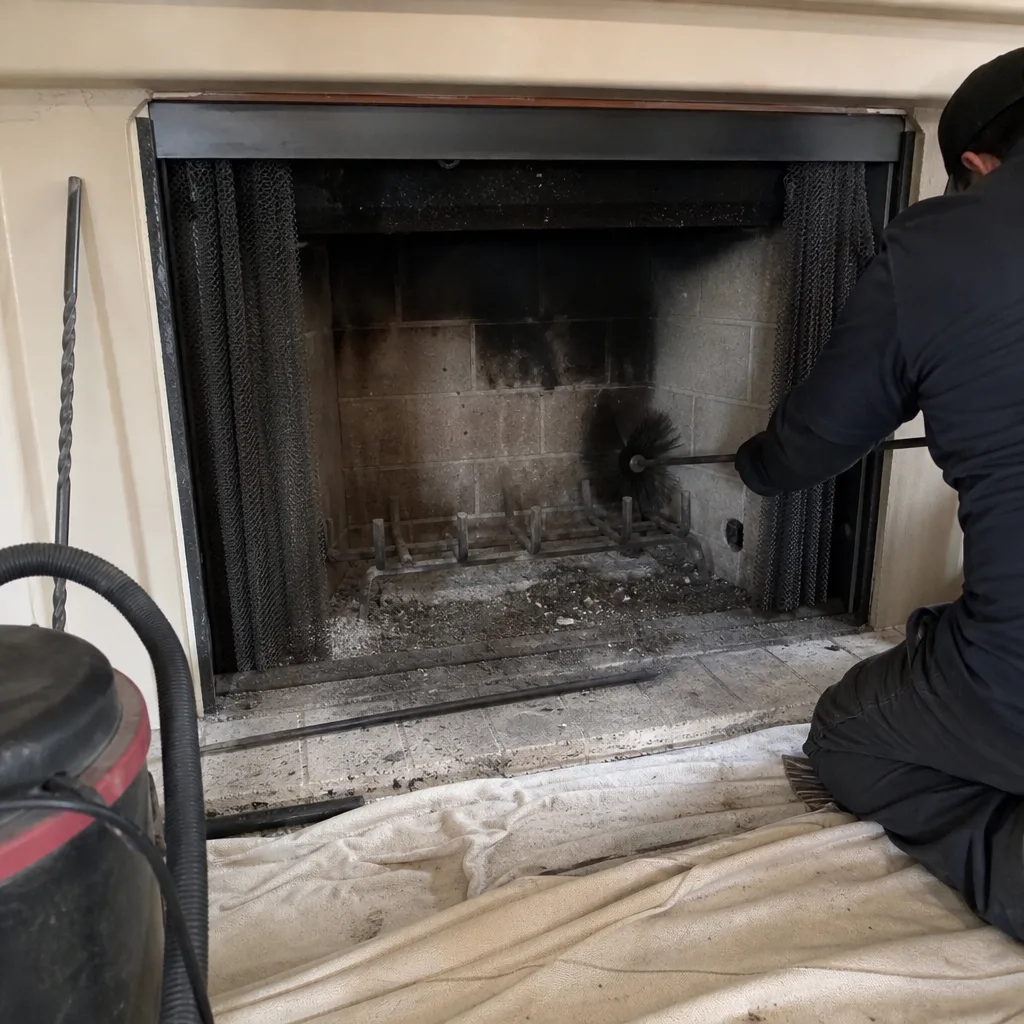 Before
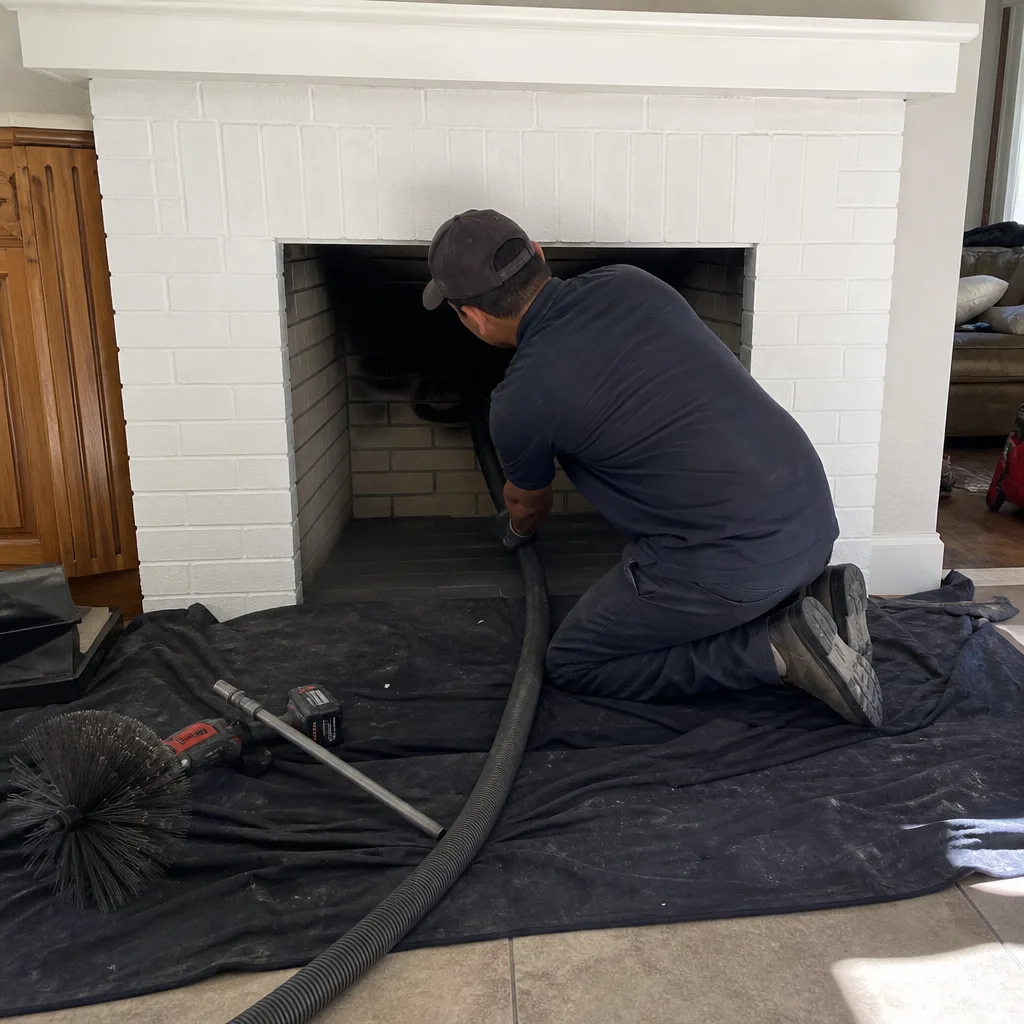 After
After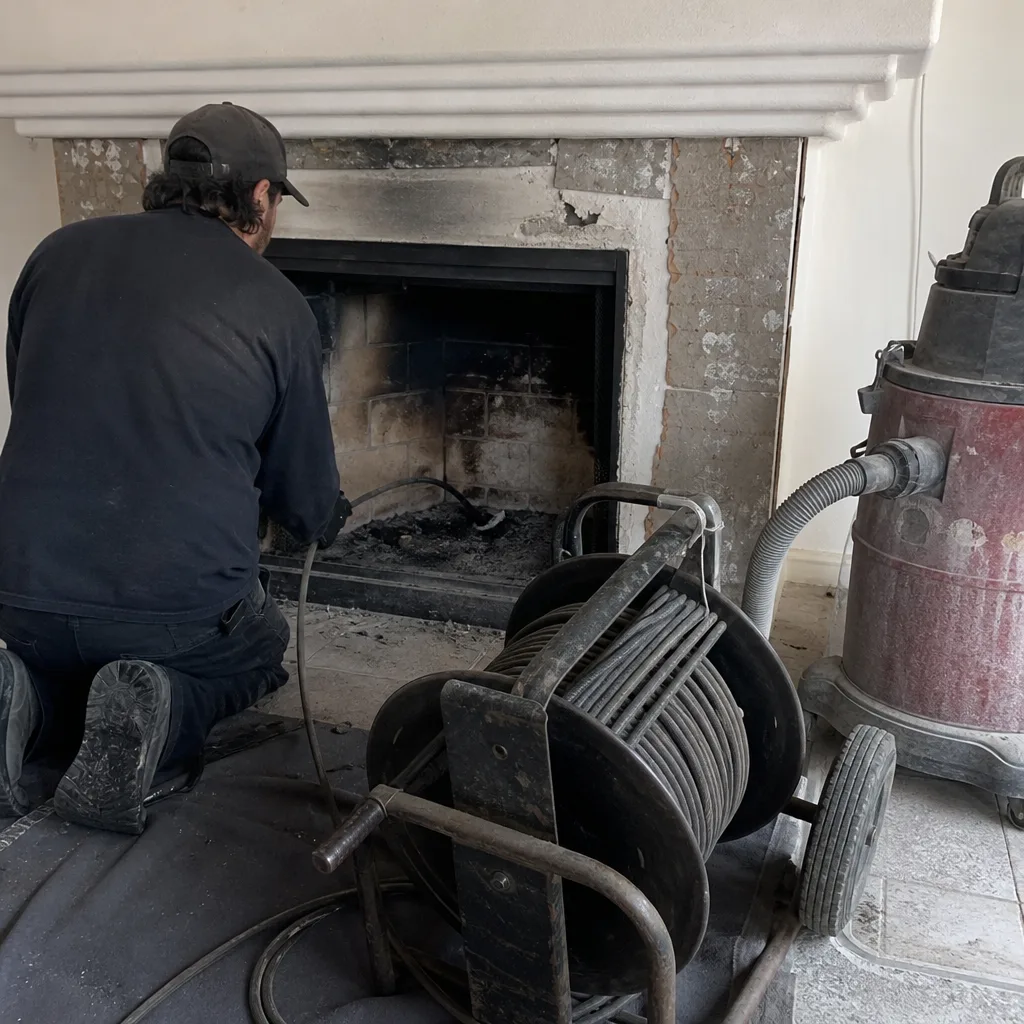 Before
 After
After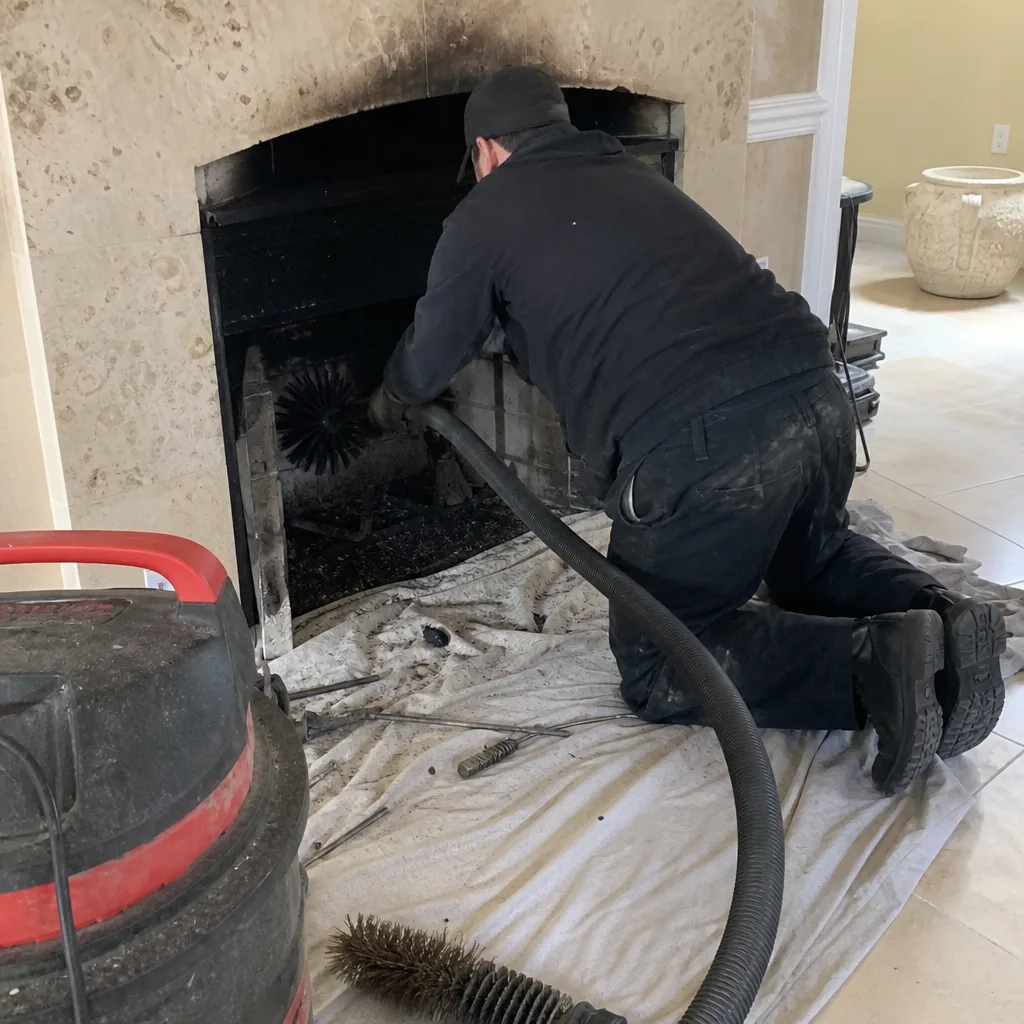 Before
 After
After